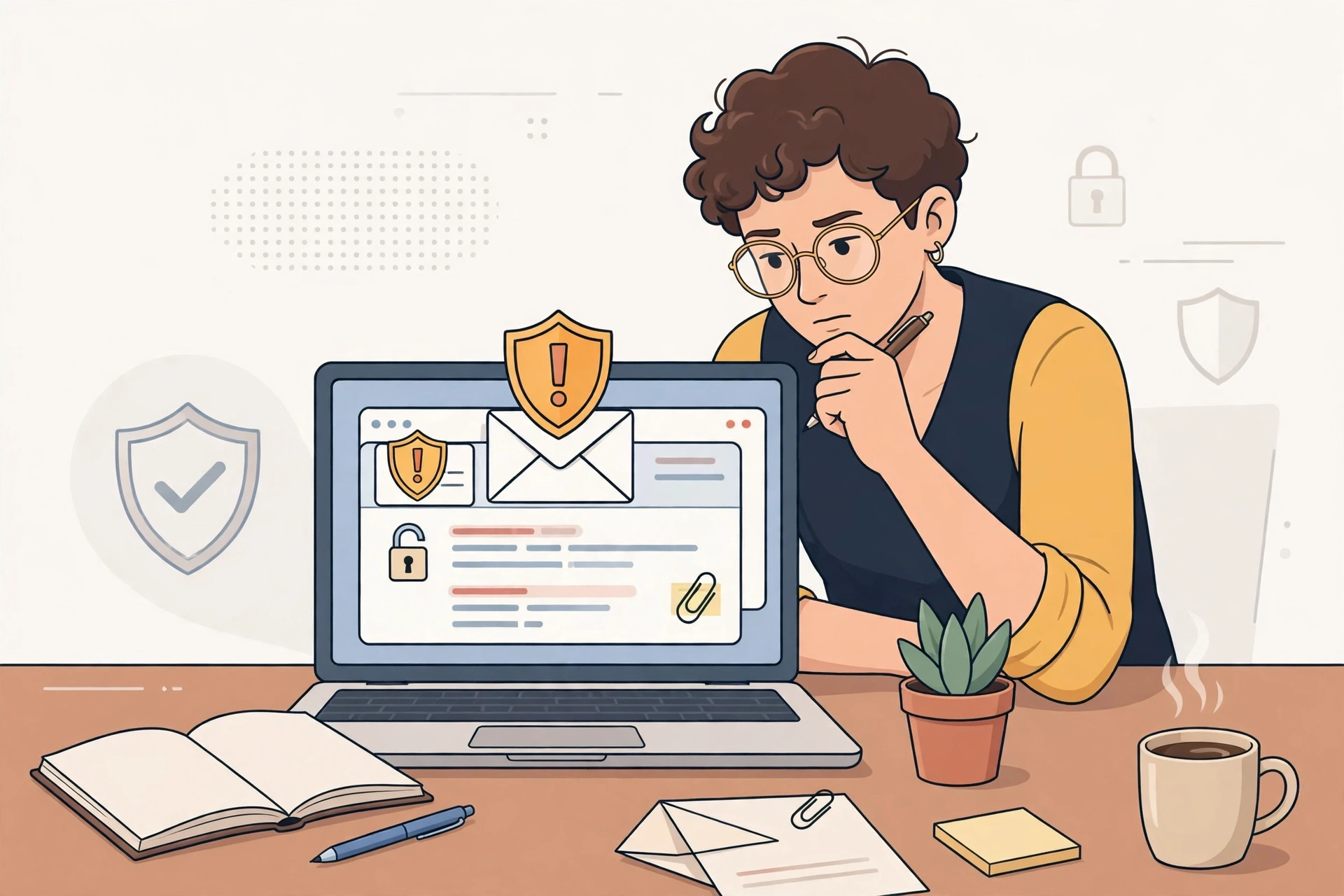

Freelancing attracts scammers precisely because it attracts hopeful beginners: people eager for their first client are the easiest to exploit. The scams follow recognizable patterns, and once you learn them, they become easy to spot. This guide covers the most common ones and the habits that keep you safe.
The Fake Client Who Overpays
One of the oldest scams targets writers directly. A “client” offers a generous writing job, then sends payment — often by check — for more than the agreed fee, and asks you to return the difference or forward money to someone else. The check later bounces, and the writer loses both the returned money and the work. Legitimate clients never overpay and never ask you to move money onward. Any payment arrangement involving refunds, forwarding funds, or buying equipment on a client’s behalf is a scam, full stop.
A related variant asks you to pay for “training,” “registration,” or “software” before starting work. Real clients do not charge writers to work for them. If a job requires an upfront fee from you, walk away.
The Endless Unpaid Trial
Not every scam is criminal — some are simply exploitative. A client requests a “trial article” to judge your work, then another, then another, each time promising paid work that never arrives. Or a job posting asks all applicants to complete a full article as part of the application, and the “test” content ends up published without payment.
Protect yourself with limits: a short paid trial is reasonable; an unpaid full article is not. Offer a brief sample from your portfolio instead of custom unpaid work, or agree to one short paid test piece with clear terms. If a client keeps moving the goalposts after free work, stop — that pattern never reverses into paid work.
Content Theft and Plagiarism Traps
Some operators harvest writers’ work without paying by posting fake jobs, collecting submissions, and publishing them under other names. Others hire writers to rewrite copyrighted material or produce fake reviews and testimonials. Both put you at risk: the first steals your labor, the second can damage your reputation and, in some cases, expose you to legal trouble.
Never submit your best unpublished work as a job application. Use portfolio samples you control, watermarked or published on your own site where appropriate. And refuse work that asks you to misrepresent facts, write fake reviews, or copy others’ content — a client who asks you to be dishonest on day one will not treat you honestly on payday either.
Phishing and Identity Theft
Freelance platforms and job boards are fertile ground for phishing. Messages that impersonate well-known companies, offer unusually high pay for simple work, and quickly steer you off the platform to email or messaging apps should raise suspicion. So should any “client” who asks for sensitive personal information early — government ID numbers, bank login details, or copies of identity documents. A legitimate client needs your payment details only when paying you, and only through a secure, normal channel.
Verify surprising opportunities independently: look up the company, check its real website and contact details, and contact it through official channels if unsure. Scammers rely on excitement and urgency to stop you checking; a ten-minute verification defeats most of them.
Red Flags Checklist
Treat any of these as a reason to pause and investigate: pay far above the market for simple work; urgency and pressure to start immediately; refusal to agree terms in writing; requests for upfront fees, money forwarding, or sensitive personal data; communication that moves off a platform immediately and avoids verifiable company details; vague job descriptions that never quite say what the work is; and testimonials or job posts with no verifiable company behind them.
One red flag alone may be innocent — a busy client can be vague. Two or three together are a pattern, and patterns are what scammers rely on you ignoring.
If You Have Been Targeted
If you realize you have been scammed, act quickly: stop all work and communication, preserve every message and document, contact your bank or payment provider if money moved, and report the listing or account to the platform where you found it. If identity documents were shared, monitor your accounts and consider the identity-protection steps recommended in your country. Do not feel embarrassed — these schemes are professionally designed and catch experienced people too. Reporting them protects the next writer.
Vetting a New Client in Ten Minutes
Before accepting work from an unfamiliar client, run a quick ten-minute check: search the company name plus words like “scam” or “complaints,” confirm the company has a real website and contact page, check whether the person contacting you matches a real employee on a professional network, and be wary if their email address is a free webmail account while claiming to represent a large firm. Also confirm the job exists where it was posted — legitimate companies can usually point you to a posting or a company page. This check will not catch every fraud, but it filters out the majority of them, and it costs less time than a single unpaid article.
Building a Scam-Resistant Career
The strongest long-term protection is boring: work through reputable channels, insist on written agreements, use deposits for new clients, keep your portfolio on your own site, and build a network of writers who share warnings about bad actors. Scammers thrive on isolation and urgency; a connected writer with standard processes is a poor target.
The Bottom Line
Freelance writing scams share a pattern: too-good pay, pressure, secrecy, and money flowing the wrong way. Learn the patterns, verify before you trust, never pay to work, and never do substantial work without an agreement. Your caution is not cynicism — it is the professional habit that keeps your writing career, and your income, yours.